RecHero

Formations

There is not one formation that is better than another — a shape is picked for the players you have, or for the system they move into next. Positions show players where to stand; positional play teaches them how to play.

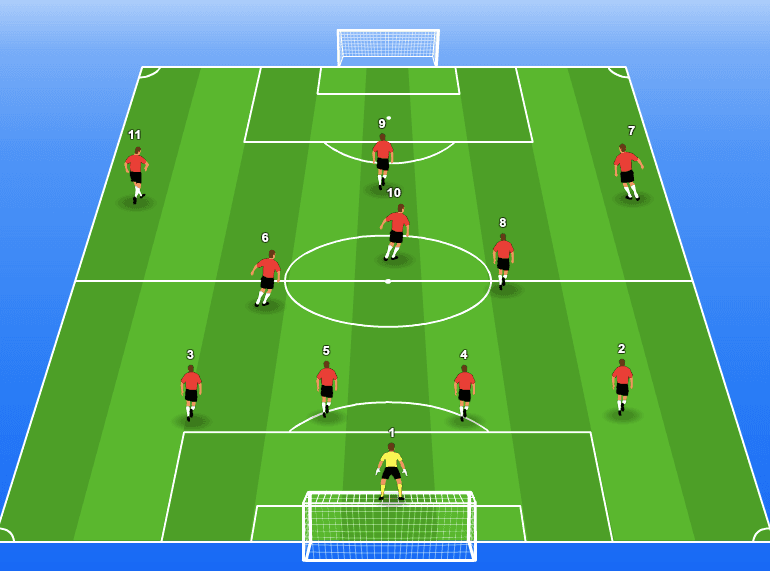
4-3-3

1-4-3-3
4-3-3 formation diagram

What it buys you

  • Option of building out of the back with the four defenders and three midfielders
  • Allows the outside backs to push up into space
  • Numbers up in attack allows a quick counterattack
  • Three forwards should allow a high pressing game, winning the ball back immediately on losing possession

What it asks of you

  • Could be outnumbered in midfield and vulnerable in wide areas
  • Requires the wide players to work together with a high work rate and recover into midfield
  • Midfielders must be disciplined about when to join the attack versus keeping shape
Every position's job
#1
Goalkeeper — patient in the build-up, look to play out of the back, but can play direct
#9
Striker — times runs well, plays on the shoulder of the last defender
#10
Attacking mid — drops between the opposition's back line and midfield to receive; creative on the ball; drops back when not in possession
#2,3
Outside backs — get wide in the build-up and move forward with the ball; compact and force play wide when not in possession
#4,5
Center backs — stay deep in the build-up so the ball can be played back to switch the point of attack; stay central, organize, may step into central midfield to support
#6,8
Center mids — very mobile with high fitness; maintain possession with a good range of short and long passing
#7,11
Wingers — stay wide in possession to create 1v1 situations

THE BRIDGE TARGET. The transcripts' coach picked 3-3-2 at 9v9 partly because it bridges into this shape — the back line still steps together, the central three still rotate together. For a U12 coach reading ahead, this is the page that shows where the season's shape is going.
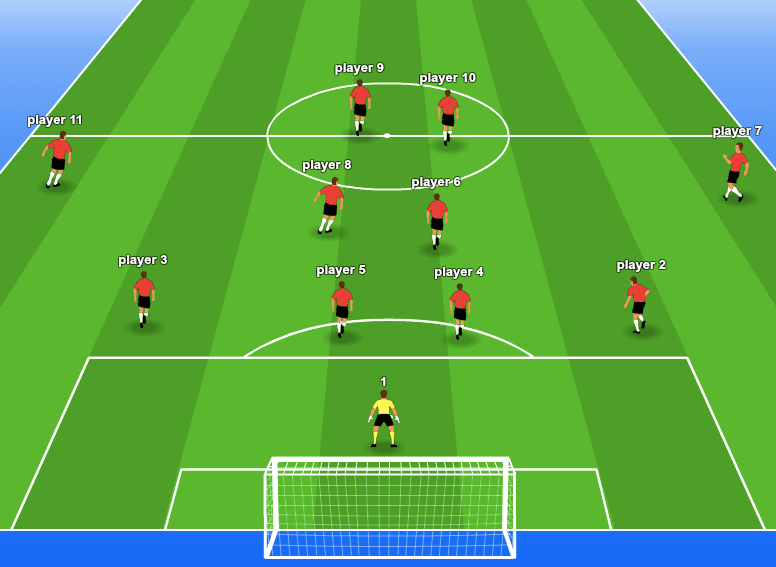
4-4-2

1-4-4-2
4-4-2 formation diagram

What it buys you

  • Easier formation for players to understand
  • Midfield shape can be flat or a diamond
  • Two central strikers occupy the opposing center backs; forwards must learn diagonal and checking runs
  • Can make two very solid defensive lines, compact for the opposition to break

What it asks of you

  • The opposing team's outside backs may be hard to contain
  • Long runs up and back for
  • Requires coordinated movement between the forwards
  • Outside backs must be able to move forward and add to the attack
Every position's job
#1
Goalkeeper — patient in the build-up, look to play out of the back, but can play direct
#9
Striker — times runs well, plays on the shoulder of the last defender
#10
Striker — drops between the opposition's back line and midfield to receive; creative on the ball; drops back when not in possession
#2,3
Outside backs — get wide in the build-up and move forward with the ball; compact and force play wide when not in possession
#4,5
Center backs — stay deep in the build-up to switch the point of attack; stay central, organize, may step into central midfield to support
#6,8
Center mids — very mobile with high fitness; maintain possession with a good range of short and long passing
#7,11
Outside midfielders — stay wide in possession to create 1v1s; squeeze in centrally when not in possession; dynamic runs

From your club's coaching-education material. A formation is where you start a kickoff — it is not where they stand, and it is not lanes they run up and down.