3v1 Early Support
Three keep the ball from one defender — and when the defender wins it, the whole game jumps to the other square.
Early support at the right angle and distance is what gives the passer two ways out, and this game asks for it before every single pass.
Starting at Core — your team is set to mixed.
15 min tonight · Two teams of 3 (3v1)
- Ages 9+
- Two teams of 3 (3v1)
- 15 min as the drill is written
- Cones, pinnies, balls
Grab Cones, two colors of pinnies, and a ball.
Build Build two 12-by-12-yard squares that share one side.
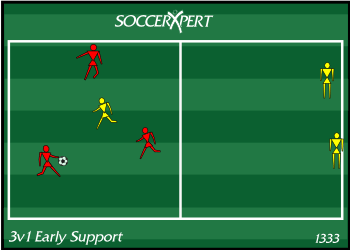
Place Three reds and one yellow defender in one square; the other two yellows in the far square. Ball starts with the reds.
- 1
Organize the players
Two teams of three in pinnies. Three reds and one yellow defender in one square; the other two yellows spread out next door.
“Reds, this square is yours — one yellow in with you. Other yellows, far square, stay moving.”
- 2
Show the jobs
Walk one round — the reds give the ball carrier two passing options; when the yellow wins it, they play it across and join their team, and one red chases in to defend. A new defender goes each time.
“Reds — two ways out, always. Yellow — win it, play it across, and go join it.”
- 3
Play
Let the pattern run. Everyone moves at all times — even without the ball — and the supporting players make a triangle around the ball carrier.
“Be there before the ball arrives! Keep moving — even without it.”
Look for The triangle — two supporting players open on both sides of the ball before it arrives.
- 4
Switch and repeat
Let the steal do the rotating — every win sends the ball next door and pulls a fresh defender in after it.
“Win it, play it over, follow it! Reds — new defender chases.”
If three can't hold it against one, nudge the squares bigger while they play — extra room buys the passer time — then bring them back in.
Go deeper · 3 notes
Why it works
Support only counts if it arrives early, at an angle the defender cannot reach, and at the right distance — and because a steal sends the game next door, every player learns that possession is never settled; you are one loose pass from chasing.
What they learn
Early support, supporting angle and distance, and movement without the ball.
What's next
4v2 Rondo — the same habits, one more passer and one more hunter.
Where does this come from?
SoccerXpert — their published drill library.
A published drill library. Useful and widely used, but not a governing body — so it fills gaps rather than leading.